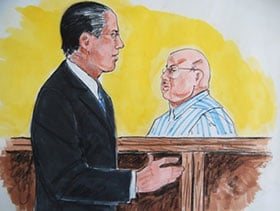
Downstate Jury Finds Sean Grayson Guilty of Second-Degree Murder
After nearly 12 hours of deliberations, a jury in Sangamon County, Illinois found former Sheriff Deputy Sean Grayson guilty of the charge of second-degree murder in the 2024 killing of Sonya Massey, a high profile case that garnered large amounts of media attention from the outset. The jury rejected the charge of first-degree murder prosecutors sought in the case after the defense fought for the jury instructions to include the lesser charge of second-degree murder which he was ultimately convicted on. Grayson and his then-partner, Deputy Dawson Farley, who testified in the trial, responded to a 911 call from Massey who claimed she possibly had a “prowler” outside her home. When they arrived at her house, body-worn camera footage showed Massey removing a pot of hot water from her stove shortly before the shooting, with Massey telling officers that “I rebuke you in the name of Jesus,” which Grayson testified he took as a threat to throw the water at him which is why he fired at Massey, killing her. Sontae Massey, one of Sonya’s cousins, disagreed with the verdict when commenting outside the courthouse, “If you get an officer who says he’s going to shoot you in the face, and then he shoots you in the face, and you only get second-degree murder?” After the events of that day, it was revealed that Grayson had worked for six different law enforcement agencies since 2020, with a pattern of allegations of misconduct following him during his law enforcement career, along with being discharged from the U.S. Army for “serious misconduct.” His background led many to question why he was hired by the Sheriff’s Office in the first place given the prior allegations of misconduct. The national media attention garnered by the killing led to Illinois legislators passing the Sonya Massey Act, signed into law this past August, which requires stricter background checks for law enforcement hiring in the state.
First-Degree vs Second-Degree Murder: What does it Mean for Sentencing?
A conviction for First-Degree Murder carries far more serious penalties than a conviction for Second-Degree Murder in Illinois. Given Grayson’s second-degree murder conviction, Grayson could receive a sentence between 4 to 20 years imprisonment, much less the 20 to 60 years for first-degree murder (before even considering firearm enhancements that do not apply in second-degree murder cases), and further the judge could sentence him to probation which is not available in first-degree murder cases. In addition, Grayson will most likely receive day-for-day credit for good behavior if he is sentence to a term of imprisonment, meaning he would likely only serve half of the ultimate sentence handed should he receive the customary credit, before considering other discretionary credits. If he was convicted of first-degree murder, any sentence would have been subject to the “Truth in Sentencing” law, which requires someone serve their full sentence for first-degree murder and 85% of a sentence for many other violent crimes. To receive a conviction of second-degree murder, first a jury must find the defendant committed first-degree murder, but also that a mitigating factor was present in the crime. These could be that the defendant “believed the circumstances justified the use of deadly force, but his belief was unreasonable” when a defendant claims self-defense or that “the defendant acted under a sudden and intense passion resulting from serious provocation by the victim” under a claim of provocation according to the Illinois Pattern Jury Instructions that apply to homicides, a variation of which would have likely been the basis for the requested second-degree murder instruction in Grayson’s matter which gave the jury the option to convict him of a lesser offense. Ultimately, asking for the jury instruction on the lesser offense and based on the defense presented, Grayson will be in a position to serve much less time in prison than if he had been convicted of first-degree murder.