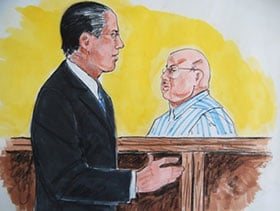
Alaska Pilot Appeals States Seizure of Plane Over Cases of Beer
In 2012 an Alaskan pilot, Ken Jouppi, was arrested and charged with knowingly transporting alcohol into the town of Beaver, Alaska, a remote community not accessible by car which prohibits alcohol. One of the passengers in his airplane had three six-packs of beer, a mix of Budweiser and Bud Light, which a state trooper found in their luggage. Authorities believed that Mr. Jouppi was aware of the alcohol, which he disputes claiming he only saw the top of the cans and that it didn’t occur to him that they would be beer. Nonetheless, he was charged and found guilty of the offense, ultimately receiving a sentence of three days in jail and a $1,500 fine. The state of Alaska then sought to seize his $95,000 plane under their forfeiture procedures, arguing that because it was used to commit the crime that they had the authority to do so. Although Mr. Jouppi argued against the seizure, the Alaska Supreme Court found that because, ““He knowingly transported a six-pack of alcohol in plain view while acting in his professional capacity as the operator of an air taxi company and the pilot of the airplane,” Justice Jude Pate wrote for a unanimous court. “This factor suggests that the forfeiture of his airplane is not grossly disproportional” despite the crime having a maximum fine of $10,000. Now, after a lengthy legal battle, Mr. Jouppi has appealed that decision to the United States Supreme Court, which has intrigued at least one justice who asked that the state of Alaska to file a brief in response to his appeal, indicating that the case may be taken up in an upcoming session. In recent years, the Supreme Court has ruled that the US Constitution places limits on forfeitures under the Eighth Amendment’s prohibition on excessive fines, both at the state and federal level, although there is no bright line rule on what exactly the definition of “excessive” may be. If the Court were to weigh in and find for Mr. Jouppi, there could be long reaching consequences at both the state and federal level for those who are/have been subject to forfeitures related to any criminal activity.
Flying With Cash Could Lead to Asset Forfeiture
As we have previously covered, the DEA recently shut down their controversial practice of targeting airline passengers for potential asset forfeiture through “consensual encounters.” However, flying with large sums of cash still remains an issue for individuals who may see their cash or other assets seized by authorities, even without any criminal charges ever being filed as a Georgia man, Brian Moore Jr., found out recently. In March of 2021 Mr. Moore was traveling to Los Angeles to shoot a music video carrying $8,000 in cash when he was stopped by DEA Officers who seized the cash. Moore told a news outlet that, ““[The DEA] told me that I looked suspicious, and they were just going to take my money based off the fact that I looked suspicious.” It was not until August this year that he had his money returned to him and a federal appeals court ruled that the government must also pay him an additional $15,000 to reimburse him for legal fees he incurred defending his case. This type of seizure occurs regularly in airports and train stations across the country, such as Chicago’s O’Hare airport and Union Station, where both innocent and culpable individuals have their money and property seized.
Federal and State asset forfeiture matters can involve the application of complex laws, have strict procedural requirements, and also play an important part of overall strategy when dealing with a parallel criminal investigation. Anyone who has their assets seized through a purported civil forfeiture should immediately contact an experienced forfeiture attorney who can fight to have their assets returned as quickly as possible and before any strict deadlines pass.